

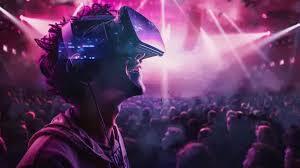
We all want to experience the magic of a live Coldplay concert, right? Chris Martin’s vocals booming from the huge speakers, the crowd singing the lyrics along while waving their flashlights. Live concerts are a magical experience.
But there is a huge drawback to live concerts i.e., accessibility. I will take the Coldplay concerts’ example. To put it simply, not everyone can afford a Coldplay concert. On average, Coldplay tickets start from $250 and can go as high as $2200. Plus, most singers and bands only do concerts in major Metropolitan cities. This means added travel and accommodation costs for people living in small cities and towns. All of this can make attending concerts a pricey feat, especially for people struggling to get by in this inflation.
If you are like me and find it hard to afford live concerts, then no need to lose hope yet.
The answer is virtual concerts. How? Keep on reading to learn all about virtual concerts, how they are making live entertainment more accessible, and how they are transforming the future of live music.
JUMP TO:
Understanding Virtual Concerts
Virtual Concerts: Behind the Scenes
Understanding Virtual Concerts
These concerts usually work with the help of Virtual Reality (VR) technology, but not all the time.
VR means a computer-generated or digital simulation of a real-world place or a human. These virtual simulations can be viewed or experienced through VR headsets.
Similarly, virtual concerts are live simulations of real concerts and can be attended online. These usually include a digital simulation of a concert stage and the musicians performing on it. In some cases, there is a digital simulation of the artist on a physical stage in a real arena, which is a hybrid concert experience.
Some virtual concerts also feature real musicians performing in a live stream, with an audience streaming the concert in real-time. Just like Billie Eilish’s Where Do We Go? The Livestream 2020 virtual concert, which was streamed live and attended by millions of fans during the pandemic. These can be viewed as it or through a VR headset for a fully immersive experience.
Moreover, virtual concerts are conducted on online platforms. This can be the Metaverse or an online streaming platform. Virtual or VR concerts have forever changed online music experiences.
Virtual Concerts: Behind the Scenes
Essentially, a virtual concert is a live streaming event where the musician or the artist performs on a set and is broadcast virtually. The musician can either show up in the virtual concert as a simulation or as themselves. Musicians are hooked up to a bunch of sensors and special cameras that allow them to appear as digital simulations in a virtual concert. This can also include high-quality microphones and other sound equipment to ensure the concert audio is top quality.
Moreover, virtual concerts can also incorporate immersive elements that allow the audience to interact with them while wearing their VR headsets. Popular VR headsets include Meta Quest 2, HTC Vive Pro 2, and PlayStation VR2. Some digital event platforms like Hopin or vFairs also allow the audience to attend the concerts in customizable avatars and chat with other concert attendees as well.
Apart from all the fancy equipment and platforms behind virtual concerts, another necessary element is the internet. To attend a virtual concert, you need to have high-speed internet connectivity. High-speed internet providers like Xfinity (with their gig-speeds) can ensure you can enjoy virtual concerts seamlessly. This is because VR relies heavily on real-time data fetching, which is what live virtual concerts are all about. A high-speed internet will also allow your VR headset to process high-res graphics and other immersive elements so that you can immerse yourself in interactive performances.
Benefits of Virtual Concerts
Virtual concerts are a game-changer for both the audience and concert organizers.
Physical concerts are a huge event. Managing thousands of attendees and making sure they stay in their own sections is a big task that requires hundreds of personnel doing the job. Preparing for a live concert takes days and endless resources. Not to forget the cost and post-event packing up. On the other end, the concert-goers spend hundreds of dollars on tickets and food and stand for hours in lines waiting to be let in, which is also not easy to manage.
Virtual concerts cater to these issues with the following benefits, which is why they are gaining traction from around the world:
-
Accessibility
As we already discussed in the intro of this blog, accessibility is a huge problem with physical concerts. Since most concerts are only held in metropolitan cities, people living far away find it difficult to attend. Moreover, the tickets for popular artists and bands get sold out within minutes. So even if a fan who lives far away really wants to go, they need to be extremely lucky to get their hands on concert tickets.
Lastly, physical concerts are hardly accessible for people with disabilities. Fans in wheelchairs find it impossible to navigate through the crowds.
-
Fan Engagement
In physical concerts, fans with VIP tickets and backstage passes can meet and see the artists. Whereas fans with standard tickets are seated so far away that the artists appear as miniature figures. This ruins their entire experience; they don’t get to capture their favorite artists from a close range.
On the other hand, with virtual concerts, fans can see their favorite artists up close. Moreover, feats like virtual meet & greets and live chat allow fans to interact with their artists directly. This is why virtual reality entertainment does wonders for fan engagement.
-
Cost-Effective
On the organizers’ part, physical concerts have huge costs like renting venues, managing travel, setting up speakers and other gear, hiring security and crowd management personnel, etc. While it is usually covered with the tickets but it is still quite a labor and capital-intensive process.
Virtual concerts are much more cost-effective. All they need is special recording equipment and a digital platform for streaming the concert, and none of the real-world expenditures.
-
Reach
Physical concerts have limited reach due to various factors like location, seating, affordability, etc. But virtual concerts are beyond these limitations. This is why fans can attend them from all over the globe. Moreover, since there are no space and capacity constraints, millions of fans can attend one virtual concert. Just like Travis Scott’s Fortnite concert had 27 million attendees from all around the world.
This is why many are considering virtual concerts as the future of live music. While this does not mean they will completely replace physical concerts, we will see a lot of artists doing both physical and virtual concerts.
So, if you live in a small town and always find it a challenge to travel to concerts, you should consider investing in a good VR headset and keep it ready for your first virtual concert. Who knows, one might just be around the corner.